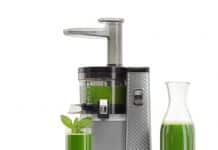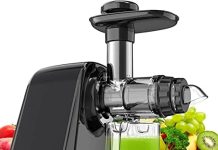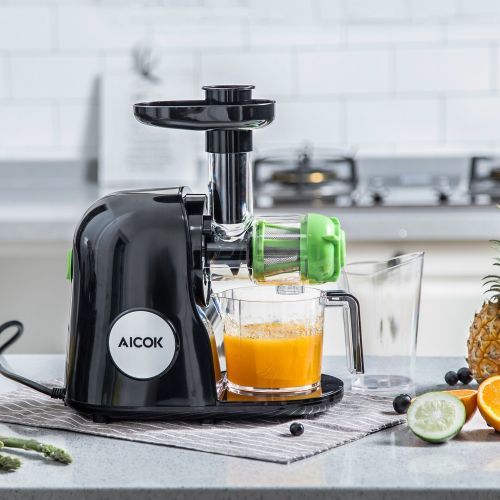
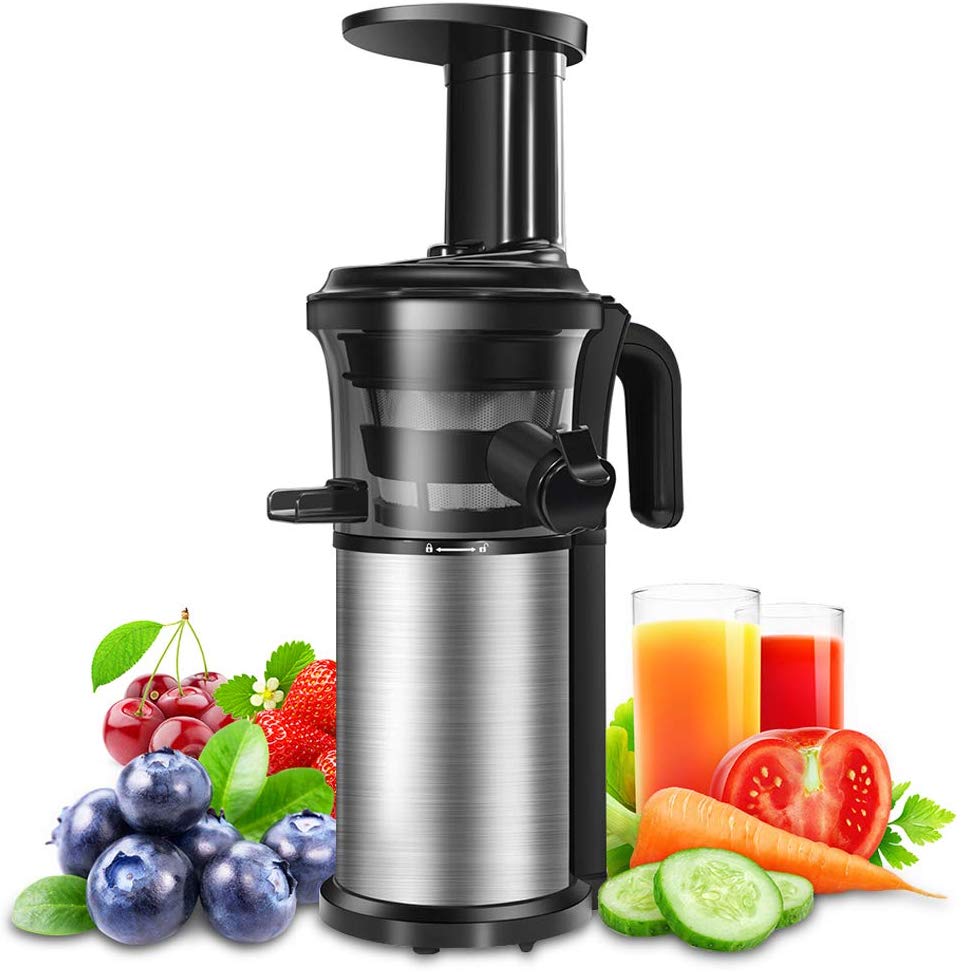
Unlike several other juice makers below 100 bucks, this juicer can extract hard/soft fruits, and vegetables can also extract green veggies without any issue.
Features SAGNART Juicer Machine for Vegetables and Fruits
This vertical juice maker is multi-feature, which means it can handle many sorts of veggies and fruits.
The biggest benefit of this masticating juicer is its portability, which means you carry it anywhere you wish.
You can extract entire of your favorite veggies, fruits using this machine-like celery, wheatgrass, apples, oranges, grapes, and several others as well.
For portability purposes, this juice maker’s lower base is made up of stainless steel, and the upper sections are of plastic fiber.
Read Next – Sagnart Juicer
Designed
- Feeding Chute – As this is a small juice maker, we cannot expect something huge. You’ve to cut your fruits/veggies in the piece before extracting them via this machine.
- Juice Yield – High yield getting more out of veggie or fruit is the key point of any juice maker. Due to its compact motor and design, the machine does not give a high yield, but it can extract up to 80 percent, which is not bad for most users.
- Reverse operability – one of the best things about this machine is its reverse operability that makes sure that there’ll not be stuck any hard veggie or fruit in the juicer.
- Less Oxidation – as this SAGNART Juicer Machine runs at a slow pace of 60-65RPM, this machine does not produce heat, which means less oxidation and extreme nutritional worth of your juice.
- Noise – this SAGNART juicer machine produces 60-70db noise, which is pretty low, and your children will not get an issue while sleeping.
Read Next – Sagnart Juicer Machine
Introduction to the SAGNART Juicer
You’ll learn what makes the SAGNART juicer a popular choice for people who want fresh juices from fruits and vegetables. The machine is designed for everyday use and aims to balance ease of use, cleaning, and nutrient retention.
Key Features and Design
You’ll want to know the main features before choosing a juicer, and the SAGNART models typically emphasize a combination of power, safety, and easy cleaning. Below are common attributes you should look for and what they mean for your daily use.
- Powerful yet energy-efficient motor for continuous use
- Wide feeding chute to reduce prep time
- Multiple speed settings or a single optimized speed for different produce
- Safety lock mechanisms and anti-slip feet
- BPA-free, food-grade materials for parts that touch produce
- Dishwasher-safe components on many models
Motor and Power
You’ll notice how the motor determines performance, especially with harder vegetables like beets and carrots. Higher wattage helps with efficiency and juice yield, but quieter motors and efficient gearing can make lower-wattage models perform well too.
Feeding Chute and Capacity
You’ll appreciate a wider feed chute because it reduces chopping work and speeds up juicing when you’re preparing larger batches. Some SAGNART units offer a wide chute and a generous pulp container so you can make multiple servings before emptying the waste.
Extraction Technology
You’ll find different extraction methods across juicers; SAGNART models may use centrifugal or masticating styles depending on the specific model. Masticating (cold-press) units extract juice slowly for better nutrient retention and foam reduction, while centrifugal units are faster but can introduce more air and heat.
Build Quality and Materials
You’ll want parts that resist staining and odors, which is especially important when juicing colorful produce like beets or turmeric. Look for stainless steel cutting assemblies, durable plastics that are BPA-free, and robust housings that resist vibration over time.
Typical Specifications (Reference Table)
You’ll benefit from a quick view of typical specs so you can compare models more easily. Remember that actual values vary by model; use this table as a general guide.
| Specification | Typical Range or Feature | What it means for you |
|---|---|---|
| Motor Power | 200–1000 W | Higher power helps with hard vegetables and continuous use |
| Speed Settings | Single speed to multiple (6+) | More settings help tailor extraction per produce |
| Feed Chute Diameter | 45–80 mm | Wider chutes reduce prep time |
| Extraction Type | Centrifugal or masticating | Masticating = nutrient retention; centrifugal = speed |
| Noise Level | 60–85 dB | Quieter motors are more pleasant for mornings |
| Material | Stainless steel, BPA-free plastic | Better hygiene and durability |
| Pulp Container Capacity | 0.8–2 liters | Larger containers mean fewer interruptions |
| Warranty | 1–3 years | Check terms for motor and parts coverage |
Benefits of Using the SAGNART Juicer
You’ll notice several advantages when you make juice at home using a well-built juicer like SAGNART. These benefits include improved nutrient intake, taste control, and the ability to customize blends to match your health goals.
- Freshness and better nutrient retention compared with store-bought juice
- Control over ingredients: no preservatives, refined sugars, or additives
- Cost savings over time if you juice regularly from whole produce
- Ability to use pulp in recipes or compost it, reducing waste
Nutrient Retention
You’ll preserve more vitamins and enzymes when you choose a juicer that minimizes heat and oxidation. Masticating-style SAGNART units typically keep more nutrients intact because they operate at lower speeds.
Taste and Texture
You’ll enjoy cleaner taste profiles with lower foam and better separation of juice and pulp when the extraction process is gentle. This is especially noticeable with leafy green juices and softer fruits.
Fruits vs Vegetables: Juicing Differences
You’ll find that fruits and vegetables behave differently when juiced, and knowing the differences helps you get better yields and more balanced flavors. Fruit juices tend to be sweeter and can mask the bitterness of greens, while vegetables often yield more volume but require chopping or slower extraction.
Leafy Greens
You’ll get excellent nutrition from leafy greens like spinach, kale, and wheatgrass, but you’ll need a juicer that handles soft, fibrous matter well. Masticating or slow juicers typically extract leafy greens more efficiently and produce less wet pulp.
Root Vegetables
You’ll need a machine with enough torque to handle hard roots like carrots, beets, and ginger. Higher torque and stronger cutting mechanisms will provide better yields and protect the motor from strain.
Citrus and Soft Fruits
You’ll find citrus is best juiced with either a dedicated citrus attachment or by segmenting to remove seeds and thick pith. Soft fruits like berries and ripe peaches may produce less juice volume but deliver concentrated flavor; blending them with firmer fruits can improve yield.
How to Use the SAGNART Juicer
You’ll want a simple, repeatable process for juicing so your mornings or prep times are smooth. Follow these general steps, and always check your specific model’s manual for safety and exact assembly.
Preparation Steps
You’ll wash and dry produce, remove large seeds and pits, and chop items that won’t fit in the feed chute. Peeling citrus and thick-skinned produce helps reduce bitterness and improves extraction.
Assembly and Operation
You’ll assemble the parts according to the manual, ensuring the safety locks are engaged before switching on the unit. Place a container under the spout for juice and one under the pulp outlet; start at the recommended speed.
Juicing Process
You’ll feed produce into the chute gradually rather than all at once, alternating soft and hard items to clean the juicer’s cutting or auger surfaces. Use the pusher gently—never force produce in—and pause occasionally if the machine starts to bog down.
Post-Juice Steps
You’ll turn off the machine before disassembly and wipe down the motor base with a damp cloth. Disassemble the juicer for cleaning as soon as you can to avoid dried pulp and stains.
Cleaning and Maintenance
You’ll keep performance high and odors low with consistent cleaning and routine maintenance. Regular cleaning also extends the life of seals, screens, and other wear parts.
Daily Cleaning
You’ll rinse parts immediately after use to prevent pulp from drying on the mesh or blades. Many removable components are dishwasher-safe, but hand-washing extends the life of mesh screens and plastic parts.
Table: Daily Cleaning Steps
| Part | Cleaning Method | Tips |
|---|---|---|
| Feed chute & pusher | Rinse + scrub with brush | Use a small brush to remove crevices |
| Strainer/screen | Rinse, then brush gently | Avoid metal brushes that damage mesh |
| Auger or blade assembly | Rinse & wash with mild detergent | Ensure all pulp is removed |
| Pulp container | Rinse or wash in dishwasher | Empty promptly to avoid odors |
| Housing/motor base | Wipe with damp cloth | Never immerse in water |
Deep Cleaning and Descaling
You’ll perform a deeper cleaning weekly or when you notice residue buildup. Soak removable parts in warm water with mild detergent and use a soft brush to clear mesh holes; avoid harsh abrasives.
Maintenance Checklist
You’ll check seals, gaskets, and mesh screens for wear every few months and replace them as needed. Lubricate any manufacturer-specified moving parts and store components dry to prevent mold.
Recipes and Pairings
You’ll want simple recipes to start using your juicer right away; these offer good balance, taste, and nutritional value. Each recipe lists basic ingredients, approximate yields, and tips for customization.
Green Power Juice
You’ll get vitamins and minerals from a mix of leafy greens with a touch of fruit for sweetness.
- Ingredients: 2 cups spinach, 1 cucumber, 2 apples, 1 small lemon, 1-inch piece of ginger.
- Method: Wash and chop. Juice in order: cucumber, apples, spinach, lemon, ginger. Stir and serve over ice.
- Tip: Add celery or kale for variety; reduce apple if you want less sweetness.
Carrot-Apple-Ginger
You’ll enjoy a classic juice with great flavor and immune-support properties from ginger.
- Ingredients: 4 large carrots, 2 apples, 1-inch ginger.
- Method: Wash and chop produce. Juice carrots first, then apples and ginger. Serve chilled.
- Tip: Use sweet apples like Fuji or Gala for a pleasant balance.
Beetroot Reviver
You’ll benefit from earthy beets balanced by citrus for a smooth flavor.
- Ingredients: 1 medium beet (peeled), 2 oranges (peeled), 1 carrot.
- Method: Juice the carrot and beet, finish with oranges. Stir and serve immediately.
- Tip: Add a small apple if the beet is too intense.
Citrus Veggie Cooler
You’ll get a refreshing, low-sugar option suitable for hot days or post-workout.
- Ingredients: 2 oranges, 1 grapefruit, 1 small cucumber, handful of mint.
- Method: Segment citrus, juice with cucumber and mint. Serve over ice.
- Tip: Remove seeds and excess pith for reduced bitterness.
Tomato-Vegetable Juice (Savory)
You’ll have a savory option that’s great for brunch or as a light meal substitute.
- Ingredients: 3 ripe tomatoes, 1 stalk celery, 1 small carrot, 1/4 cucumber, pinch of sea salt, dash of hot sauce (optional).
- Method: Juice all vegetables; season and stir. Chill or serve immediately.
- Tip: Add basil or a small clove of garlic for extra flavor.

Troubleshooting Common Issues
You’ll encounter occasional issues, but most have quick fixes that get you back to juicing. Below are common problems and practical solutions.
Table: Troubleshooting Guide
| Problem | Likely Cause | Quick Fix |
|---|---|---|
| Low juice yield | Improper prep or worn screen | Chop produce smaller, rotate recipes, replace screen |
| Machine stalls | Large chunks or too much pulp | Turn off, remove blockage, feed smaller amounts |
| Excessive foam | Fast speeds or soft fruits | Slow down (if possible), add water or alternate with firmer produce |
| Bitter juice | Over-juiced citrus pith or certain veggies | Remove pith, balance with sweet fruit or apple |
| Loud noise/vibration | Loose parts or damaged bearings | Tighten screws, check assembly, contact support if persistent |
| Leaks | Poor seal or cracked parts | Inspect seals and gaskets, replace damaged parts |
Motor Overheating
You’ll notice the motor may get warm during extended use; modern motors are designed with thermal protection. If the unit overheats, switch it off, unplug, and allow it to cool for at least 15–30 minutes before resuming.
Poor Extraction from Leafy Greens
You’ll usually get less juice from greens because they hold more pulp, and extraction techniques matter. Chop greens into tighter bundles, alternate with firmer produce, and consider using a masticating model for best results.
Safety Tips and Best Practices
You’ll protect yourself and your equipment by following simple safety guidelines during assembly, operation, and cleaning. Safe habits also prolong the life of your machine.
- Always read and follow the user manual and safety warnings.
- Unplug the juicer before disassembly and cleaning.
- Use the pusher provided; never insert utensils into the chute while operating.
- Keep hands, long hair, and loose clothing away from moving parts.
- Use on a stable, flat surface to avoid tipping.
- Supervise children and keep the unit out of reach when in use.
Comparing SAGNART with Other Juicer Types
You’ll want to see how SAGNART models stack up against other common juicer designs. The table below gives a side-by-side look at performance areas you likely care about.
| Feature | Centrifugal Juicer | Masticating (Cold-Press) | Triturating (Twin Gear) |
|---|---|---|---|
| Speed | Fast | Slow | Slowest |
| Juice Yield | Moderate | High | Highest |
| Nutrient Retention | Moderate | High | Very high |
| Leafy Greens | Average | Excellent | Excellent |
| Noise | Louder | Quieter | Quietest |
| Price Range | Generally lower | Mid-range | Higher |
| Cleaning Effort | Easier | Moderate | More effort |
| Best For | Quick juicing | Nutrient-focused | Maximum extraction & variety |
You’ll choose based on your priorities: speed, nutrient preservation, or maximum yield. Some SAGNART models are centrifugal for speed, while others aim for cold-press benefits.
Buying Guide: What to Consider
You’ll want to think about several practical aspects before buying a juicer so it fits your routine and budget. Consider usage frequency, types of produce you’ll juice, storage space, and how much cleaning you’re willing to do.
- Think about your typical batch size and choose pulp container capacity accordingly.
- Decide whether you want a wide chute for faster prep or a narrower one for fine control.
- Compare warranties and availability of replacement parts.
- Check noise levels if you’ll use it early in the morning.
- Read user reviews focusing on durability and after-sales service.
Warranty, Support, and Spare Parts
You’ll confirm warranty coverage and what it includes before purchase to avoid surprises. Commonly, warranties cover motor failures and manufacturing defects but exclude wear-and-tear parts like filters or gaskets.
- Check whether the warranty includes return shipping for repairs or replacements.
- Look for readily available spare parts such as screens, augers, and seals.
- Verify the manufacturer’s customer support options: phone, email, and online resources.
Environmental and Health Considerations
You’ll reduce food waste by using pulp in recipes or composting it, and you’ll enjoy the health benefits of fresh juice. Choosing BPA-free materials and durable designs also reduces the environmental impact from frequent replacements.
- Use pulp in muffins, soups, or as compost for your garden.
- Select models with recyclable materials and energy-efficient motors.
- Consider your overall diet: juice is a supplement to whole foods, not a replacement for balanced meals.
Frequently Asked Questions (FAQ)
You’ll likely have questions as you begin juicing; here are clear answers to common queries.
Q: How often should you clean the juicer? A: You’ll rinse removable parts after every use and do a deeper clean weekly or as needed to prevent buildup.
Q: Can you juice frozen fruit? A: You’ll typically avoid frozen whole fruit unless your juicer manual permits it; thaw slightly or blend as a smoothie instead.
Q: Is juicing better than blending? A: You’ll get concentrated nutrients and less fiber in juice; blending retains whole-fiber content and is more filling. Choose based on your goals.
Q: What produce should you avoid juicing? A: You’ll avoid large pits, unripe or overly soft moldy items, and produce with toxic seeds (e.g., apple seeds in large amounts). Always check your manual for specific warnings.
Q: How long does homemade juice stay fresh? A: You’ll consume it immediately for best nutrients; refrigerated in a sealed container it may remain acceptable for 24–72 hours depending on the extraction method and acidity.
Cleaning
This machine’s cleaning is also very smooth, which can take up to 2-4 minutes.
Every part is dishwasher, safe, and simple to assemble/disassemble.
For the healthy lifespan of your machine, you’d clean it after every use.
Read Next – Proctor SILEX 66331 Alex’s Stand Juicer
Warranty
Luckily, this juicer comes with a one-year warranty, which starts when you purchase it.
Pros
- Low noise level
- Reverse blade function
- Can easily juice green veggies
- User-friendly
- Low maintenance
- Low price
Cons
- Doesn’t include a product warranty
Read Next – Sagnart Centrifugal Juicer Machines
Final words
This SAGNART Juicer Machine provides more advantages compared to its price.
Lower noise level, portable, and compact design make you sure that you can juice something anytime.
But we would recommend this if you’re a beginner because it’s user-friendly and low budget.
So, this is the finest juicer for beginners.
Read next – KOIOS Juicer – Slow Masticating Juicer
Best Masticating Juicer – Top 5 Masticating Juicer Reviews
Read Next – AOBOSI AMR520 Slow Masticating Juicer Extractor
You’ll find a SAGNART juicer to be a useful addition if you want fresh, customizable juices at home and you’re willing to maintain the unit. Whether you prioritize speed, nutrient retention, or maximum yield, there’s likely a SAGNART model that meets your needs. Compare model features, read user reviews, and consider how it fits into your daily routine before making a purchase.
You’re now equipped with detailed information to make an informed decision and to get the most from your juicer once you bring it home. If you’d like, you can tell me what produce you usually buy and I’ll recommend a specific model type and recipes tailored to you.

Slow Juicer, Sagnart Juicer Machine for Vegetables & Fruits, Portable Vertical Cold Press Juicer with Reversal Function, Masticating Juicer with Juice Jug and Brush. BPA-free

Masticating Juicer, Sagnart Slow Juicer Machine 2 in 1 Citrus Juicer Antioxidant Cold-Press Juicer, Mute and Reverse Function Juicer Extractor for Fruits or Vegetables with Juice Cup & Brush

Sagnart Centrifugal Juicer Machines, Juice Extractor for Whole Fruit and Vegetables, BPA-Free, 2 Speed and Overheat overload protection, Anti-drip and Detachable Citrus Juicer, Included Brush
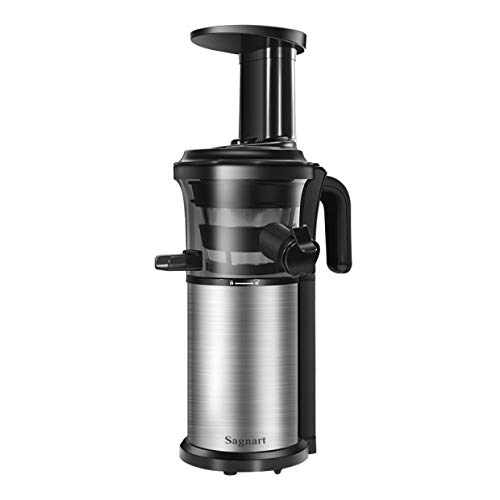
Slow Juicer machine Sagnart masticating juicer for Vegetables & Fruits
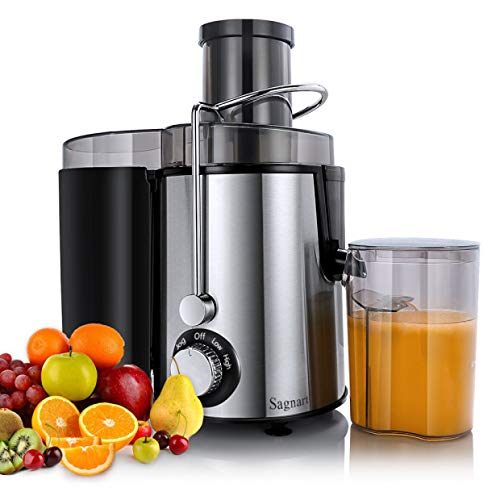
Centrifugal Juicer Sagnart Juicer machine.